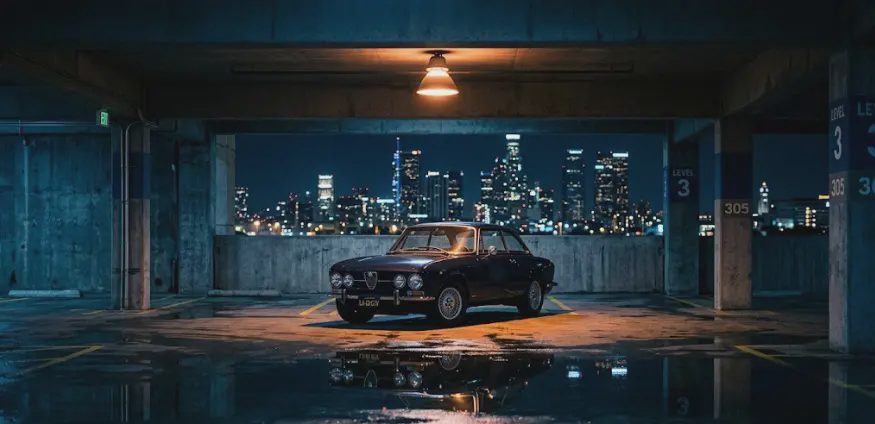
Most car media arrives like a panic attack. Numbers, lap times, horsepower wars, angry grille close-ups, and a commentator who mistakes volume for conviction. Scroll through any automotive homepage and you will find a thousand words telling you exactly how fast a machine is, and almost none telling you what it means to live with it after midnight, when the city is silent and the car is just a shape moving through shadow.
I started Midnight Marque because cars deserve better than content. They deserve interpretation, atmosphere, and the kind of attention that notices how light falls across a dashboard — not just how fast the dash to sixty is.
My name is Adrian Mercer. I am a Los Angeles-based observer of automotive design, brand strategy, and the visual culture that turns machines into memory. For over a decade, I have worked at the intersection of car culture, design criticism, and film analysis, advising brands on how shape language creates desire, and writing about the emotional architecture of automobiles. I shoot 35mm film on night drives, study the way parking garage echoes tell the truth about build quality, and believe that the best cars are remembered in silhouette first.
This site is the result of a single, quiet conviction: what makes a car stay in the mind is rarely what makes it onto a spec sheet.
The Noise That Drowns Out Meaning
Modern automotive media has become an efficiency machine optimized for SEO, not insight. It feeds on comparison, ranking, and confrontation. Cars are treated like smartphones — reviewed, scored, and forgotten — and the language used to describe them has narrowed to a technical dialect that excludes anyone who cares about visual intelligence or cultural meaning.
The problem is not data itself. Numbers have their place. The problem is that data has become a substitute for seeing. We can recite the torque figure of a new electric sedan but cannot describe why its roofline feels rushed, why its grille reads as insecure, or why its cabin lighting makes you feel like you are in a laboratory rather than a place of comfort.
This is not just a failure of taste. It is a failure of literacy. Design is a language, and cars speak it fluently whether we listen or not.
What Actually Makes a Car Memorable?
If you pause and ask yourself which cars have stayed with you longest, the answer almost never lives in the brochure.
Question: Why do certain cars remain vivid in memory while others vanish the moment they are sold?
Spec-Driven Memory | Silhouette-Driven Memory |
|---|---|
Retained through numbers: 0-60 time, horsepower, Nürburgring lap | Retained through presence: the line of the shoulder in a parking garage, the warmth of analog dials |
Relies on comparison and ranking | Relies on personal moments and emotional setting |
Fades as newer models surpass the data | Deepens with time as the image separates from the market |
Speaks the language of competition | Speaks the language of identity, loneliness, and desire |
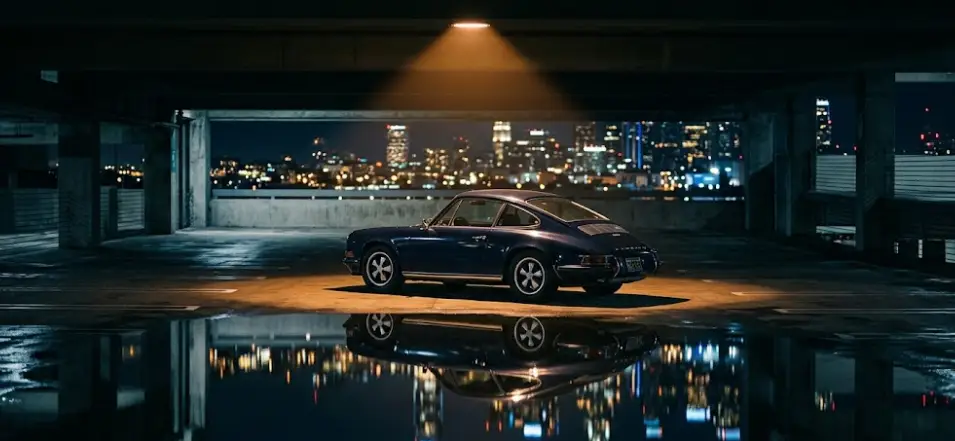
The cars we dream about are not necessarily the fastest. They are the ones whose visual character aligned with a moment in our lives — a single streetlight, a late-night drive through downtown, the sound of a door closing in a concrete structure. Memory attaches to shape, not statistics.
Design Literacy as a Form of Respect
To treat a car as a visual object worthy of serious critique is not pretension. It is a form of respect for the people who designed it and the people who will live with it. At Midnight Marque, I approach every car with the same observational discipline I would bring to a building, a film frame, or a piece of industrial design.
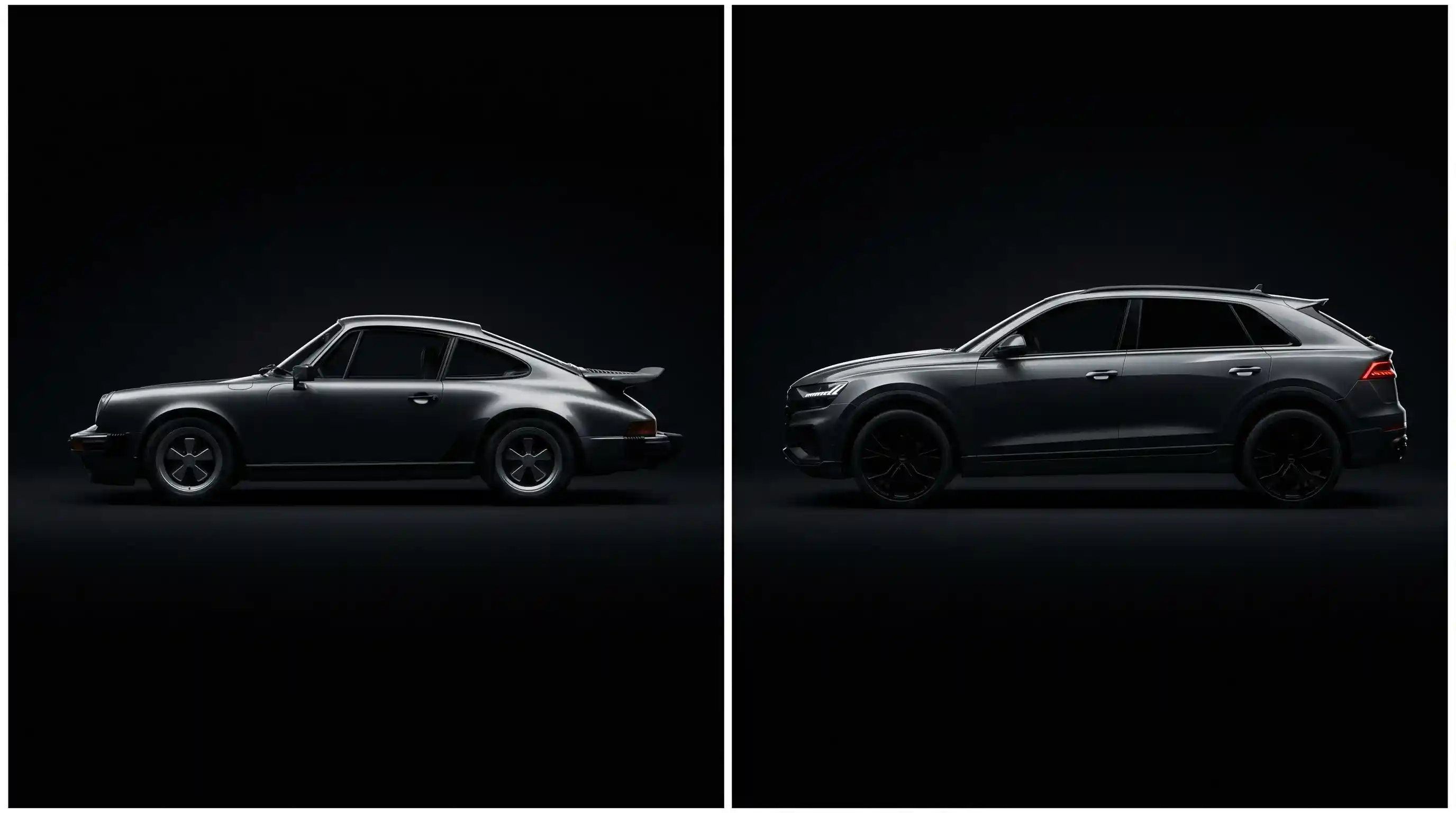
This means looking at proportion before horsepower. It means analyzing the emotional tone of a headlight signature — why some faces read as calm confidence and others as anxious aggression. It means understanding brand psychology well enough to tell when a marque is acting from self-possession and when it is performing for attention.
Over years of consulting on automotive brand image, I have seen how the most enduring design choices are the quietest ones. Restraint is not absence. It is the hardest luxury signal to execute, and the one most easily missed by content that only values the loud and the new.
What Midnight Marque Will Do Differently
Midnight Marque is built around four distinct lenses, each one an antidote to the shallow scroll.
Design After Dark examines the visual language of cars — proportion, surfacing, lighting, and cabin architecture — with the seriousness usually reserved for architecture criticism. We will ask why a roofline can make a car feel mature or juvenile, and what it means when a dashboard is designed for use rather than for showroom applause.
Cinema in Motion treats cars as cultural symbols. We will explore why Michael Mann’s night-driving sequences reveal more about automotive presence than most track tests, and how the sedan functioned as a character in film long before crossovers arrived to erase personality from the road.
Marque Psychology decodes brand identity and the visual codes of prestige. We will map the difference between genuine authority and performance theater, and trace what happens when a luxury brand mistakes noise for confidence.
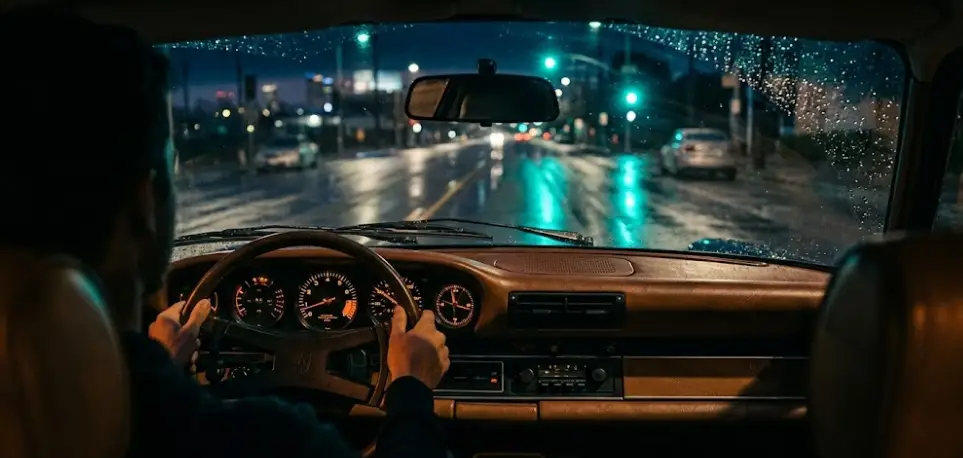
Roads of Memory holds the personal essays. These are the late-night drives, the parking garage echoes, the moments where a car detaches from its transaction and becomes part of your emotional geography.
Each category is updated weekly, not daily. That slowness is intentional. Good looking requires time.
A More Perceptive Way of Looking
If there is one thing I hope Midnight Marque gives its readers, it is not more opinions. It is a sharper eye.
You will start noticing the things most content ignores: the tension in a shoulder line, the restraint of a badge, the color temperature of cabin light, the way a city reshapes a car’s personality after dark. You will become more perceptive, not more hyped.
Some of the most meaningful cars I have ever encountered did not announce themselves. They waited. They let the light find them. That is the kind of presence this site is dedicated to.
If this opening note resonates, the next pieces build directly from its foundation. We will examine why certain headlights project confidence while others communicate panic. We will unpack why Porsche rarely needs to explain itself. And we will look at how cinema understands automotive presence more honestly than most media.
Turn the volume down. Notice what stays.