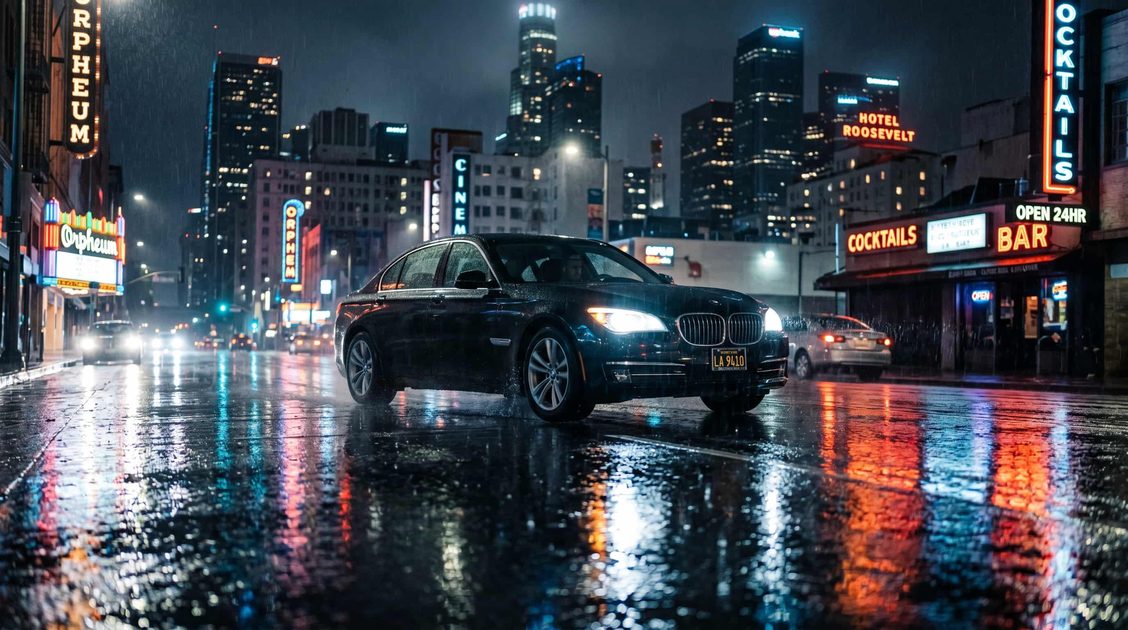
Most car media treats an automobile as a collection of numbers that happen to move. The review script is predictable: horsepower, torque, zero-to-sixty, infotainment screen size, a verdict delivered with the rushed energy of someone who has already moved on to the next press loan. The car is present only as a product, never as an atmosphere.
Michael Mann has spent four decades making films that operate in the exact opposite register. In his hands, a car is never a product. It is a chamber of solitude, a moving threshold between the character and the city, a glass-and-steel container for longing, control, and existential drift. Mann understands cars not as vehicles but as psychological architecture. And in doing so, he reveals more about what cars actually mean to us than any track test ever could.
The Car as Psychological Space
In Mann’s cinema, a car interior is as carefully composed as a room. The dashboard glow is a character. The windshield frames the world outside like a screen within a screen. The sound of a door closing is not a transition but an emotional seal — a boundary drawn between the quiet of the cabin and the chaos of the street.
Take the opening sequence of Collateral (2004). Max, the taxi driver played by Jamie Foxx, is introduced in his cab. The camera lingers on the details: the worn vinyl seat, the photos clipped to the sun visor, the precise way he adjusts the mirror. This is not a car. This is a man’s temporary home, his office, his protective shell. When Vincent, the hitman played by Tom Cruise, enters the cab, the cabin pressure shifts. The car becomes a confessional, a trap, a stage for two worldviews colliding. The windshield frames Los Angeles as a river of light passing indifferently by. Every driving scene in Collateral is lit with a nocturnal precision that makes the city feel infinite and the cab feel unbearably small.
Question: What makes Michael Mann’s approach to filming cars fundamentally different from a typical car chase or car review?
Typical Car Media Approach | Michael Mann’s Cinematic Approach |
|---|---|
Car as performance tool — numbers, grip, acceleration | Car as psychological space — mood, memory, isolation |
Exterior shots dominate, emphasizing speed | Interior shots dominate, emphasizing human presence |
The city is a backdrop, often erased by blur | The city is a character, reflected in glass and light |
Sound design favors engine roar and tire screech | Sound design favors engine thrum, silence, and the hum of streetlights |
Purpose: excitement and spectacle | Purpose: meaning, tension, and emotional truth |
This is not to say Mann cannot film action. The shootout and escape sequence in Heat (1995) is one of the most influential car chases in cinema, precisely because it refuses to behave like one. There is no music. No comic relief. Just the percussive crack of assault rifles echoing off downtown office towers and the desperate, methodical driving of Robert De Niro’s character. The car — a Chevrolet Chevelle — is not performing stunts. It is executing an exit strategy. The engine note is a low, urgent thrum. The driving is a form of problem-solving under maximum pressure. This is a car sequence that respects the car as a tool of survival, not a toy.
Light, Glass, and the City at Night
Michael Mann’s visual signature is the city at night, seen through glass. Streetlights smear into horizontal lines. Dashboards emit a cool, aquamarine glow. The camera often places the viewer directly behind the driver’s shoulder, looking out at the road ahead, the rearview mirror framing what has already been left behind. This is not decoration. This is visual meaning-making.
The way Mann films the windshield deserves its own critical study. In Manhunter (1986), the hero’s nighttime drive to a crime scene is a symphony of neon and shadow, the car slicing through urban darkness like a submarine in deep water. In Miami Vice (2006), the speedboat and Ferrari sequences are bathed in a humid, electric palette, the vehicles becoming the visual rhythm of a world defined by movement and risk. In each case, the car is not just a way to get from one scene to another. It is the place where characters gather themselves, make decisions, and sit with the consequences of what they have just done.
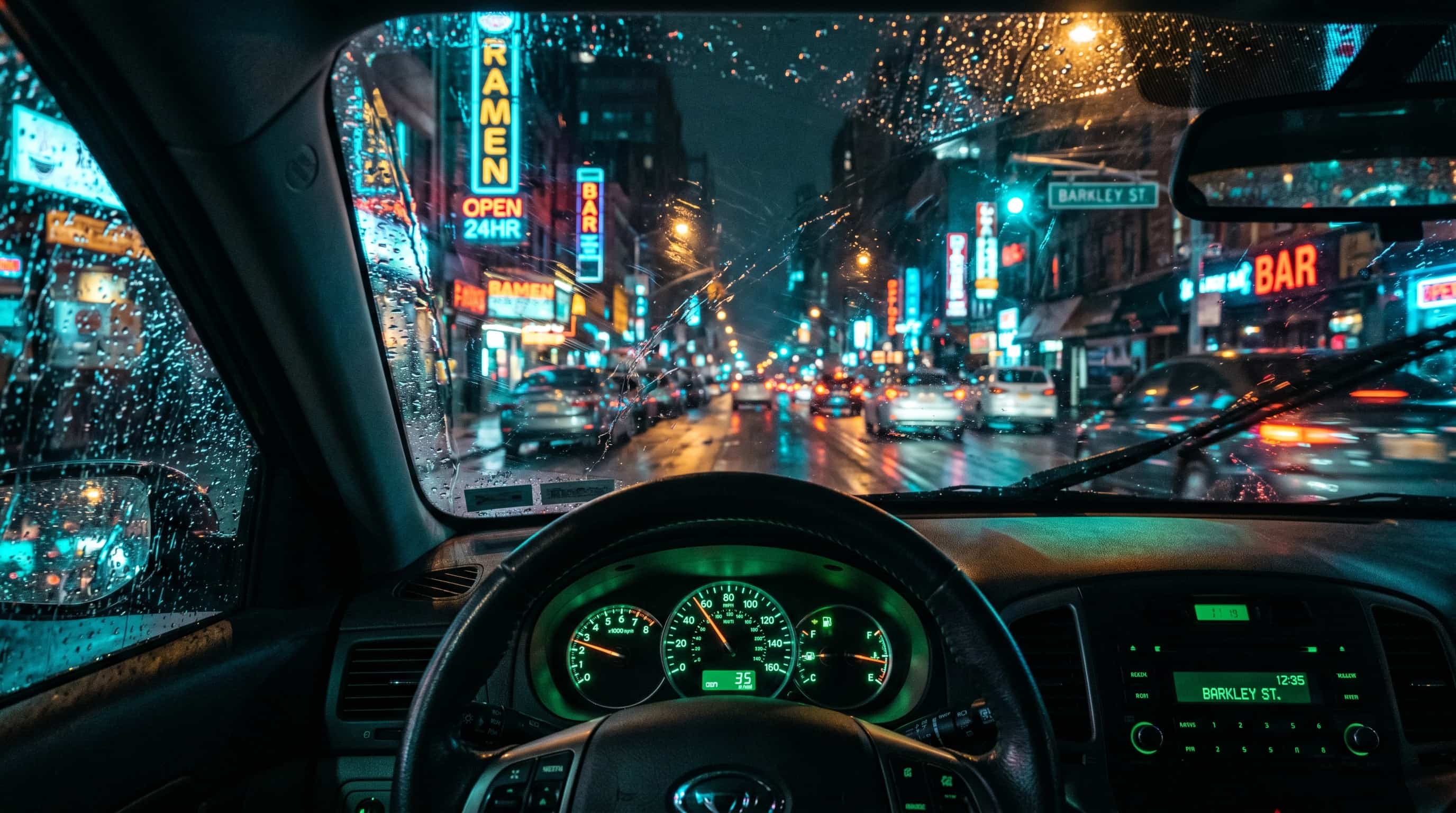
This use of the car as a contemplative chamber is almost entirely absent from automotive media. A typical review might mention “cabin ambiance” in passing, but it rarely explores what it feels like to be alone inside a car at 2 a.m., when the machine’s real character emerges. Mann’s genius is to understand that a car’s most truthful moments happen not during acceleration, but during drift — that state of suspended attention where the driver and the machine share a quiet, moving solitude.
Why Most Car Media Misses the Point
The automotive press has accepted a false premise: that a car is only worth discussing in terms of how it performs against competitors. This creates a content ecosystem where every car is a contestant, every review is a scoreboard, and every reader is positioned as a potential buyer. The emotional dimension of driving — the loneliness, the calm, the unspoken relationship between a person and a machine that asks for nothing but focus — is either ignored or sentimentalized into advertising cliché.
Mann’s films reject this framework entirely. His cars are never brand placements waiting for a logo shot. They are narrative tools. A character’s vehicle choice tells you something about their psychology. Neil McCauley’s plain, fast Chevelle in Heat is a statement of discipline: no flash, only function. Vincent’s silver taxi in Collateral is a suit of anonymity, weaponized. The Ferrari in Miami Vice is not a prize but a piece of the undercover identity, worn like a tailored jacket, projecting an image that may be true or false depending on the light.
This is car analysis at a level of sophistication that most auto journalists never approach. It asks not “Is this car good?” but “What does this car mean in the context of a life, a city, a moment of crisis or calm?” The difference is the difference between a spec sheet and a poem.
What Mann Teaches Us About Looking
The lesson Michael Mann offers to anyone who cares about cars is deceptively simple: slow down and notice the relationship between the machine, the light, and the silence. A car’s presence is not a function of its exhaust note. It is a function of how it holds space when it is not performing.
The best cars, like the best film frames, do not demand your attention. They invite you to sit with them long enough to discover what is there. Mann’s camera does this naturally. It lingers on the curve of a rear fender as a car pulls away from the curb. It watches light slide across the hood in a parking structure. It understands that speed is not about cutting to a blur; it is about the tension in the moments before and after.
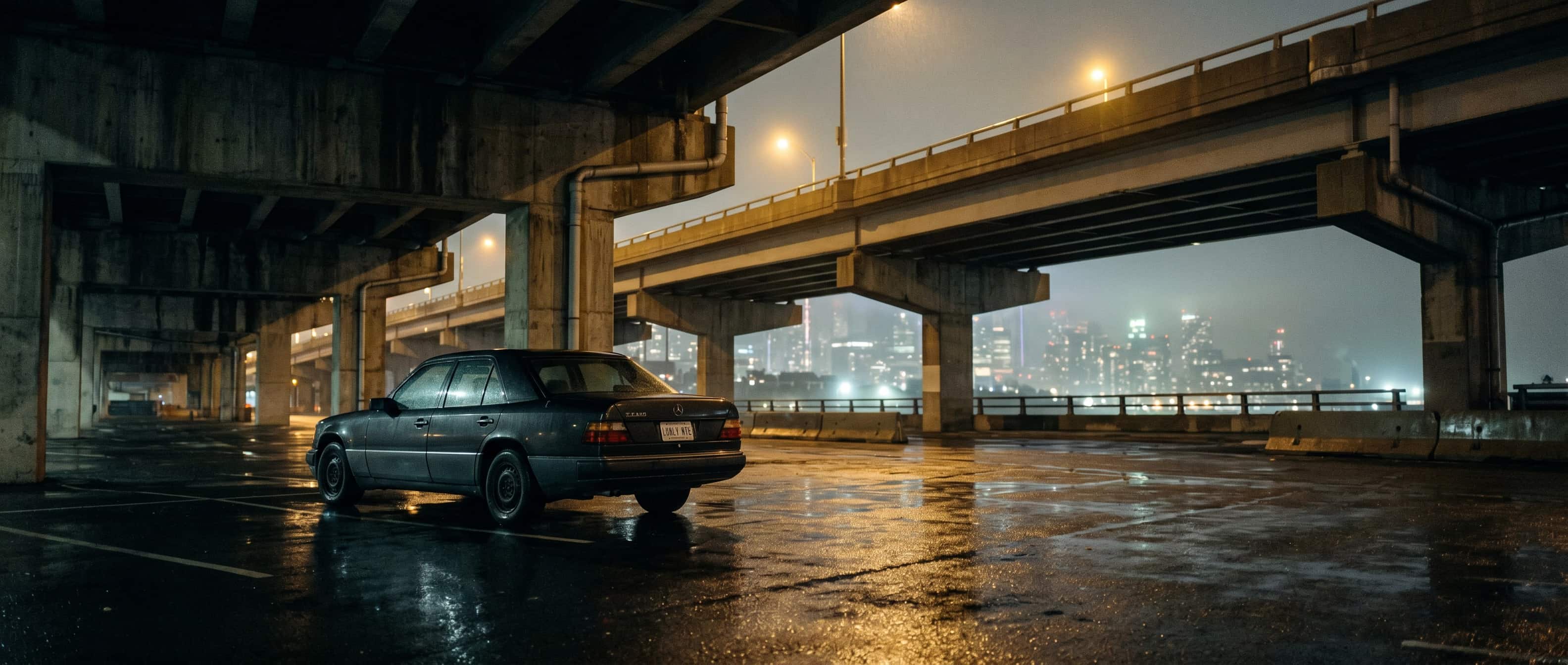
Automotive media could learn something here. Instead of asking how fast a car is, ask what it feels like to be inside it when the city is asleep. Instead of photographing cars on a racetrack, photograph them under a single streetlight, next to a concrete wall, with the faint echo of a distant siren in the air. The machines deserve a visual language that treats them with the same seriousness that Mann treats a firearm, a tailored suit, or a face in close-up.
The Road Ahead
Midnight Marque exists to give cars this kind of attention. The Cinema in Motion category will continue to explore how film, television, and visual culture construct automotive meaning — from the sedan as a narrative character to the architecture of male aspiration to the way night driving became a visual shorthand for masculinity itself. Later pieces will examine how the best directors use glass, shadow, and motion to make machines speak without words.
For now, let Michael Mann serve as the entry point. Watch Collateral again. Watch Heat. But watch them differently this time. Pay attention to the cabin silence between lines of dialogue. Notice the dashboard light. Track how the windshield frames loneliness. You will discover that a film director has understood cars more deeply than an industry of car reviewers — and that a movie camera, placed with intention, can do what a track test never will.